01/04/2020 - 31/10/2020
An exhibition organised jointly with TAMAT.
Through folding, a two-dimensional surface takes on volume and organises a space into three dimensions. That's what makes folds so fascinating. The exhibition explores the theme of the fold in its broadest sense, focusing on textiles. In addition to the art of fabric, other artistic expressions such as painting, sculpture, photography and video complete a vast array of works inspired by the fold. Fine arts, applied arts, memories of crafts and local history : the event deliberately mixes genres and breaks down the usual categories. Twenty-six different aspects of pleating, all of which are presented at the two exhibition venues from A to Z, in an original scenography that follows the logic of the alphabet. At TAMAT, pleated clothing and accessories stand side by side with the works of contemporary designers who are renewing our vision of the art of the fold. For the Museum of Fine Arts, the fold is an opportunity to look at its collections from this new angle, focusing in particular on drapery, which was a major concern for artists.
Belgian artist Johan Muyle and students from La Cambre's "Sculpture" workshop took over the museum's atrium for an astonishing display of the museum's three-dimensional works...
To coincide with the exhibition "Plis. Art & Textiles" (Folds. Art & Textiles) and the installation of Johan Muyle's work "Mon Manège à moi c'est toi" (My Merry-go-round is you), we invited the internationally-renowned Belgian artist and his students from the "Sculpture" department at La Cambre (Brussels) to work in the museum's atrium.
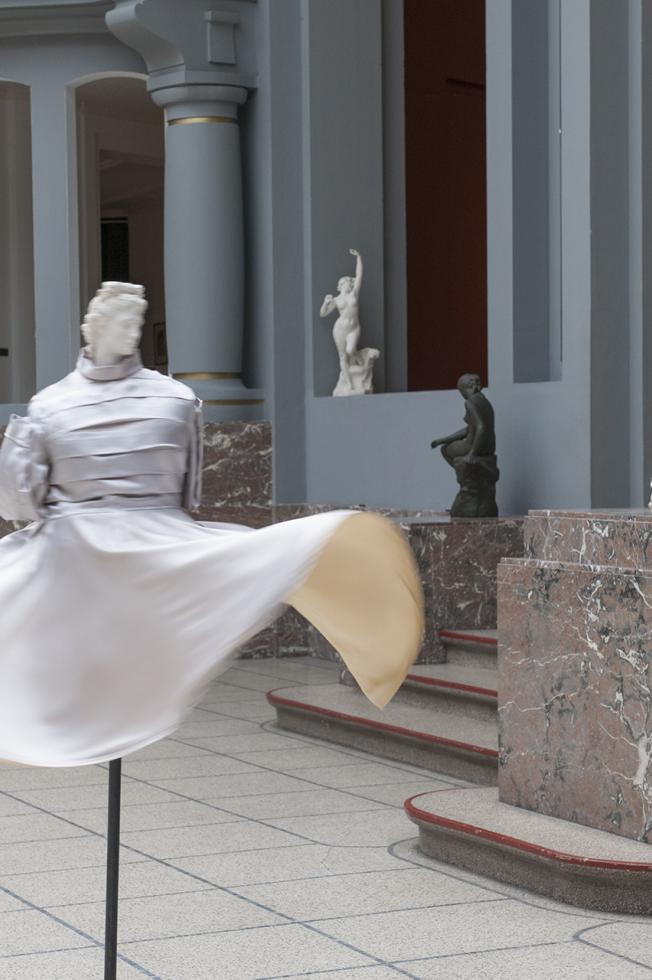
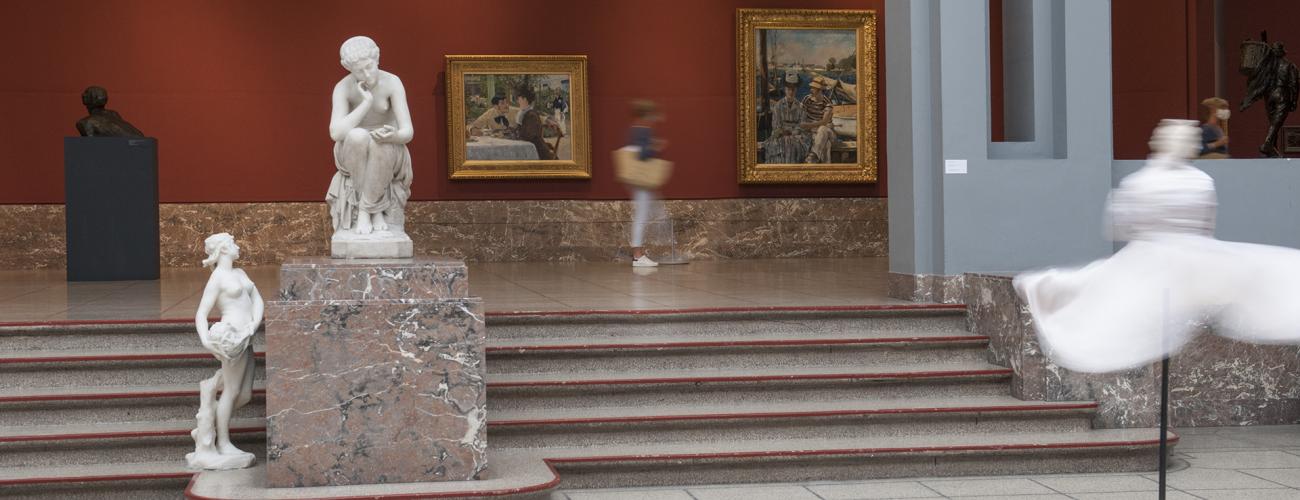
"Mon Manège à moi c'est toi" is part of a series of assemblage sculptures created by Johan Muyle in the early 1990s. Set in motion by an electric mechanism, it combines representations from two cultures : a plaster copy of the head of an ancient Greek goddess – a benchmark for statuary in Western art – is complemented by a wide, swirling dress that echoes Eastern culture and its famous whirling dervishes. Constantly spinning out of control, to the point of absurdity, does this hybrid, mixed-race sculpture encapsulate the image of a world in which different cultures want to live together, but which nevertheless "doesn't go round in circles"? Borrowed from the song written by Jean Constantin and popularised by Édith Piaf, the title of the work explores this relationship with others through a global consideration of romantic feelings when the person you love "makes your head spin".
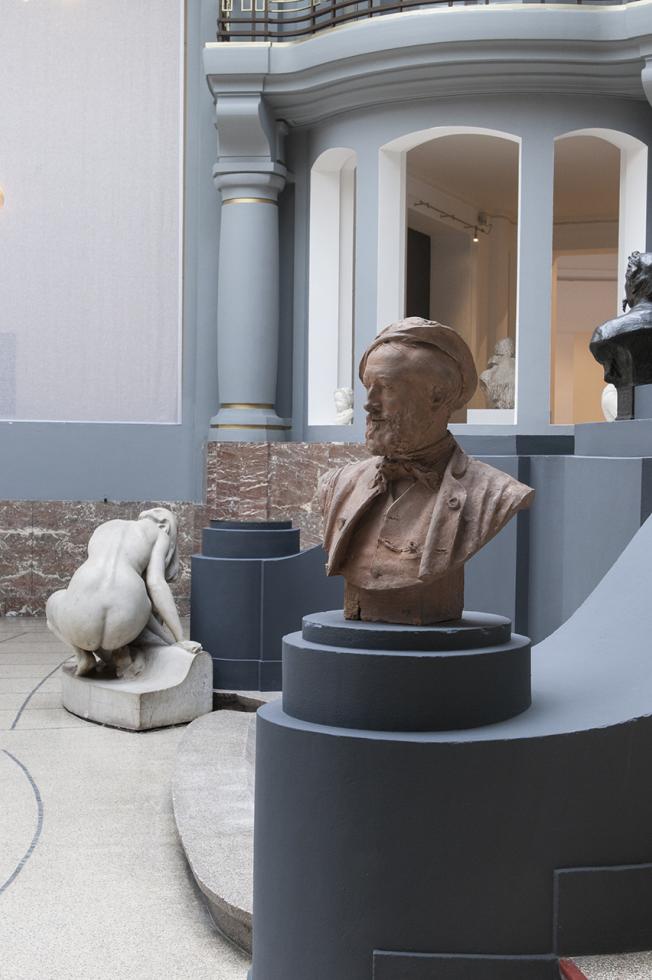
As its title suggests, this dynamic work is designed to interact not only with the viewer but also, as is often the case with the Belgian artist, with the surrounding environment. So for the exhibition "Plis. Art & Textile" (Folds. Art & Textile), Johan Muyle wanted to rethink the way his work was displayed in the museu's vast hall, which was designed by Victor Horta to house the sculpture. Over the course of a two-day workshop with his students from the "Sculpture" department of the La Cambre art school in Brussels, they selected three-dimensional works from the collection. The result is a disconcerting arrangement that reveals the hidden face of some of the museum's exhibits and invites visitors to create their own associations as they wander through the spaces.
This original journey undoubtedly reflects Brancusi's cherished idea that sculpture should aspire to be "a form in motion". The works by Guillaume Charlier, Jef Lambeaux, Jacques de Lalaing, Charles Van Der Stappen and Georges Minne, chosen to surround the animated work, evoke the fundamental role played by the fold or drape in expressing life and challenging the static condition of statuary.
Plis. Art & textile
This album contains 3 items.